Diploma in Mechanical Engineering
- Home
- /
- Academics
Diploma in Mechanical Engineering
 Download Syllabus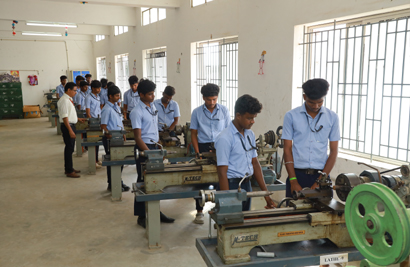
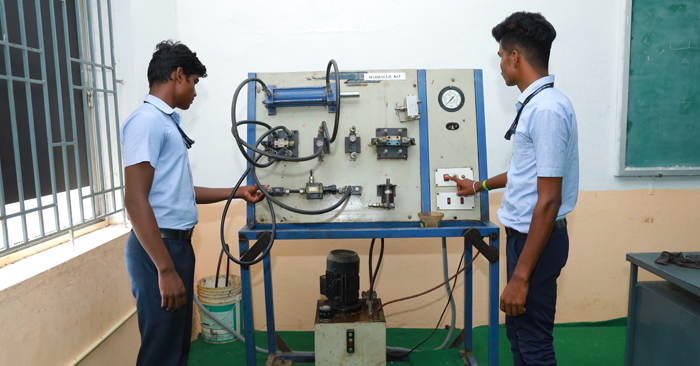
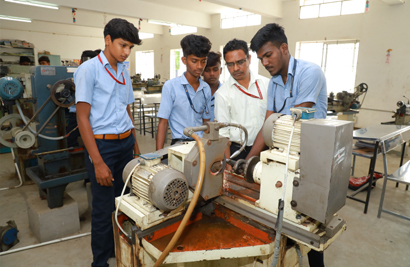
The Department of Mechanical Engineering at SVST Kongunadu Polytechnic College was established in 2009. Since its inception, the department has been committed to delivering high-quality education in mechanical engineering. Our department is equipped with two well-maintained laboratories that provide students with hands-on experience in various aspects of mechanical engineering, including project work, fabrication, and maintenance. These facilities are integral to the practical training that helps our students develop the skills needed to excel in the industry.
The Diploma in Mechanical Engineering program offers a robust curriculum that covers a wide range of topics, including fluid mechanics, thermal engineering, manufacturing technology, and CAD/CAM. The course is designed to provide students with a deep understanding of both theoretical and practical aspects of mechanical engineering. With a focus on industry-relevant skills, our program prepares students for successful careers in various mechanical engineering domains.
Career Opportunities
Graduates of the Mechanical Engineering program have numerous career opportunities in industries such as automotive, aerospace, manufacturing, and energy. Our program equips students with the skills and knowledge required to work in roles like mechanical design engineer, production engineer, maintenance engineer, and quality control engineer. The strong technical foundation and practical experience gained during the course enable our graduates to take on challenging roles in leading companies.
Lab Facilities
Our department boasts a range of specialized laboratories that enhance the learning experience:
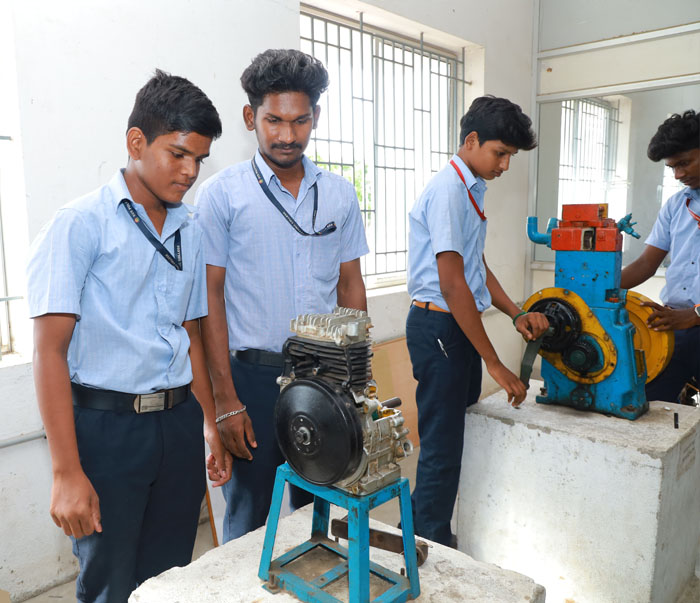
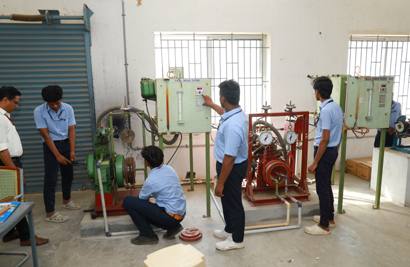
- Fluid Mechanics Laboratory: Equipped with Venturimeter, Orificemeter, Pipe Friction Apparatus, Centrifugal Pump Test Rig, Francis Turbine Test Rig, and more for hands-on experiments in fluid dynamics.
- Metrology Laboratory: Facilities for linear, angular, profile, and surface measurements, as well as instrument calibration.
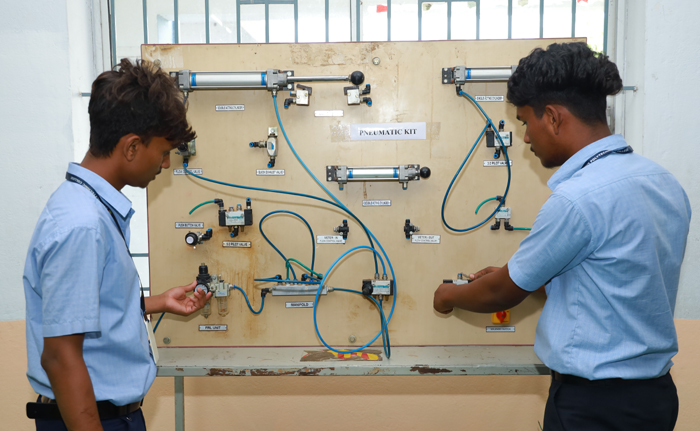
- Process Automation Laboratory: Features PLC kits, two-stage air compressors, basic pneumatic trainer kits, and more for training in automation.
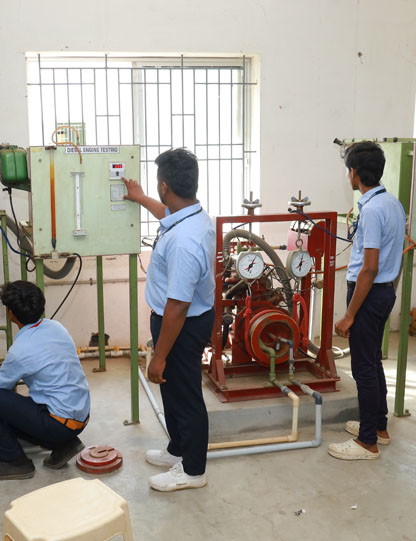
- Thermal Engineering Laboratory: Includes various engines, refrigeration cycle test equipment, and other apparatus for studying thermal processes.
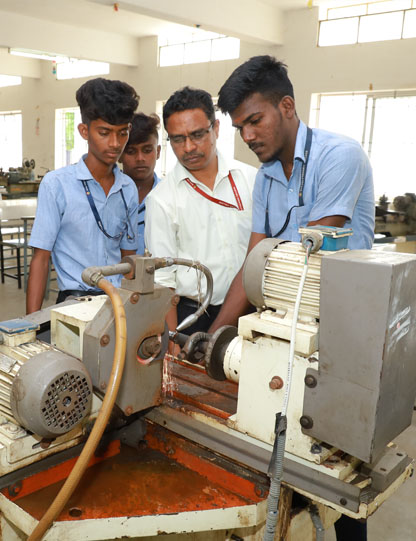
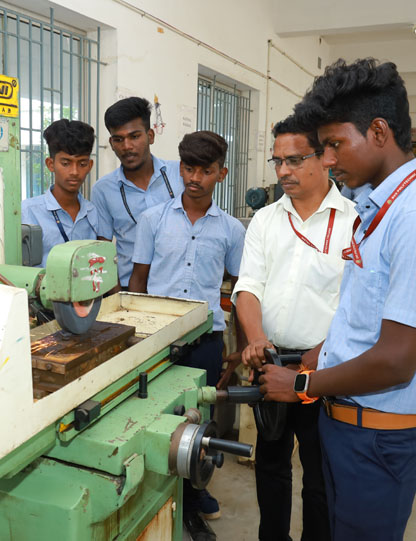
- Manufacturing Technology Laboratory: Contains heavy-duty and light-duty lathes, milling machines, grinding machines, and more for training in manufacturing processes.
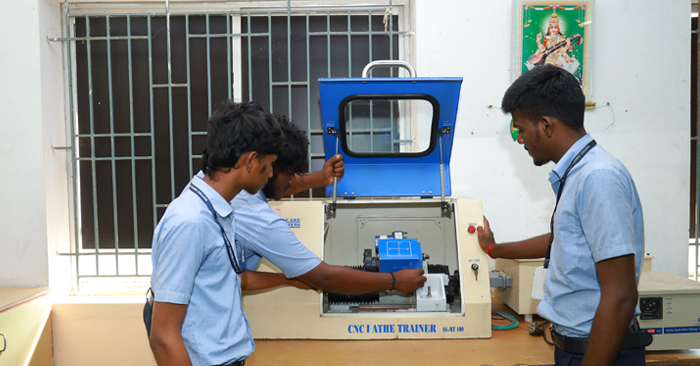
- CAD/CAM Laboratory: Equipped with CNC Fanuc Turn and Mill Machines, AutoCAD software, CNC simulation software, and advanced printers for computer-aided design and manufacturing.
Department Goals
- Achieve 100% academic performance with state-level marks.
- Secure 100% placement in campus interviews.
- Conduct four association programs, including technical seminars, paper presentations, and workshops.
- Organize two industrial visits and in-plant training sessions annually for practical knowledge enhancement.
Placement
The Department of Mechanical Engineering has a strong track record of placing students in reputable companies such as TVS Logistics, Reynold Chains India, Renault, Hitachi, LGB, Ucal, and Aquasub Engineering. Through continuous efforts, we have seen a steady increase in placement rates since 2010. Our focus on technical refreshment and seminars ensures that students are well-prepared for the demands of the industry.
Achievements
- Our students have consistently achieved state-level second rank in Board Exams over the last two years.
- Students have secured the top three positions in paper presentations at technical symposiums hosted by other colleges.
Training Programs
Our students receive daily training in CNC machines from 5-7 PM, which enhances their efficiency and industry readiness. Additional training in CAD/CAM software is provided through external sources and certifying agencies.